


Nigeria Blessing Gbadu Umbugadu
Every entry I make represents someone’s reality.
With three degrees in Agricultural Economics – a bachelor’s from the University of Maiduguri, and a master’s and PhD from the University of Agriculture, Makurdi – Blessing dedicated her academic life to understanding how agriculture shapes communities and livelihoods.
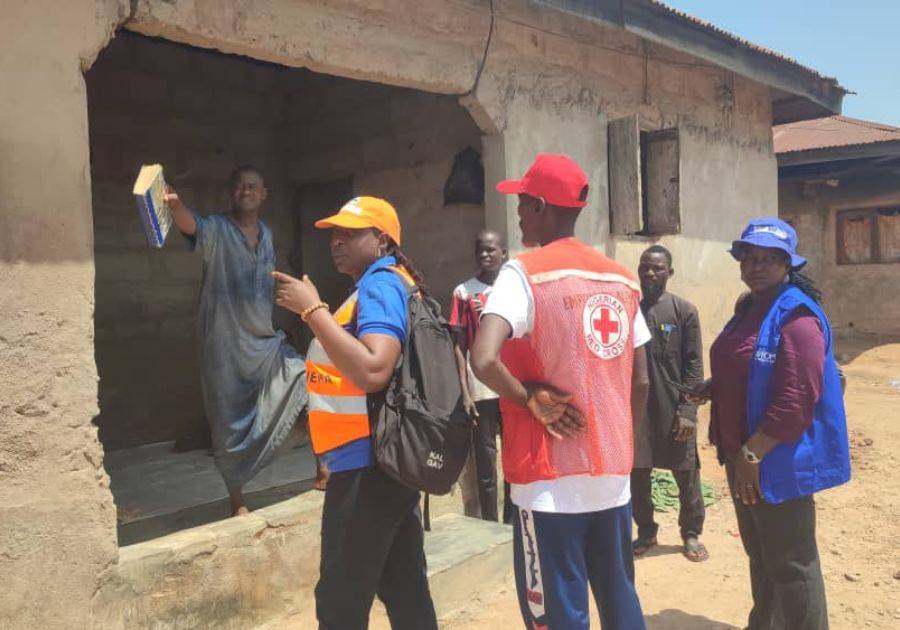
Today, as a Data Enumerator, she applies that extensive knowledge in a practical way: gathering accurate, reliable information from the field to ensure that humanitarian programmes truly reflect the needs and realities of the people they serve.
Building a career with purpose
Before joining CTG, Blessing built a strong foundation working with both local and international NGOs. As a State Coordinator, she oversaw project monitoring and annual reviews and later gained further experience as a Research Assistant. These roles sharpened her skills in research, evaluation, and project coordination – but what truly inspired her to work in humanitarianism was the opportunity to make a real difference.
“I joined the humanitarian sector because I am committed to improving the lives of vulnerable people, especially in the areas of food security, livelihoods, and community development,” she shares.
Blessing now works as a Data Enumerator with CTG. Her day-to-day role merges practical and people-focused work: “My responsibilities include conducting field visits to administer questionnaires to respondents – both Internally Displaced Persons and returnees – by engaging with them to ensure accurate and complete data collection.” Above all, she emphasises the need to build trust: ensuring respondents’ answers and data remain confidential is a big part of her role.
A day in the life
A typical day in the field begins with preparation. “I always ensure I have the right tools (like a charged phone), with my app uploaded to collect data, and GPS devices. Once I am in the community, I introduce myself to the local leaders or households, explain the purpose of my visit and ask for their consent before any other activity begins. If consent is granted, then I begin conducting interviews or focus group discussions. I also provide feedback to my team lead, and report challenges where need be.”
Like many in her line of work, Blessing faces ongoing challenges: “As an Enumerator, one of the main challenges I face is respondents’ reluctance to share information and their rejection of assessments. To overcome this, I always ensure that I introduce myself clearly, explain the purpose of the survey, and assure them of confidentiality. I try to use local languages to build trust.”
One experience in particular has stayed with her. “During one of the household surveys we did, I interviewed a widow who explained how she struggled to provide food and education for her children. That moment strengthened my passion for accuracy in fieldwork because it made me understand more that every entry I make represents someone’s reality.”
Despite the difficulties, Blessing continues to find purpose in the results of her work. “My motivation comes mostly in seeing the positive impact of our work on vulnerable individuals and communities.”
Beyond the field
Outside of work, Blessing has her own ways of recharging. She enjoys reading and writing – especially on agriculture and development topics – listening to music, and spending time with family.
When asked what advice she would give to others hoping to join the humanitarian sector, her words were clear: “My advice to someone interested in pursuing a career in the humanitarian sector is for the person to come in with a genuine passion to help people and a strong sense of kindness. Even though humanitarian work can be frustrating at times, I will advise the person to be open to serve.”
Blessing’s story is a reminder that behind every dataset and every report is a human life – and people like her make sure the reality of those lives is recorded with dignity and compassion.
Read more stories from the field here.