Nigeria Oteh Emmanuel
Every day in the field we have a story to tell because of the experiences we go through. But we still stand tall.
People like Oteh make vital contributions every day that they step into the field to combat Nigeria’s humanitarian crisis. Born and raised in Katsina Ala, Benue State, he now works on the frontlines of displacement, gathering data and helping ensure that people forced from their homes aren’t left behind.
A humanitarian career
His academic journey began at Government College Staff School in Katsina Ala, continued at General Murtala Mohammad College in Yola, Adamawa State, and culminated at the Federal University of Technology in Yola.
Oteh’s career began with the World Health Organization (WHO) as an independent monitor in Wamba LGA, Nasarawa State. He later worked with Magic Solution Cargo, a logistics company based at Nnamdi Azikiwe International Airport in Abuja. It was there that he came across a job advertisement for the Displacement Tracking Matrix (DTM) – a turning point that would lead him directly into the heart of Nigeria’s humanitarian response.
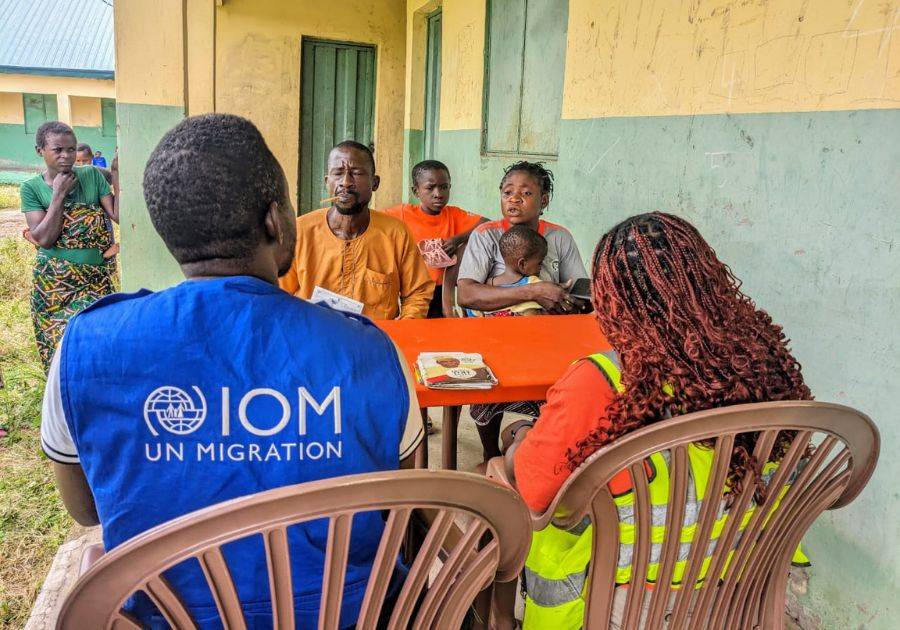
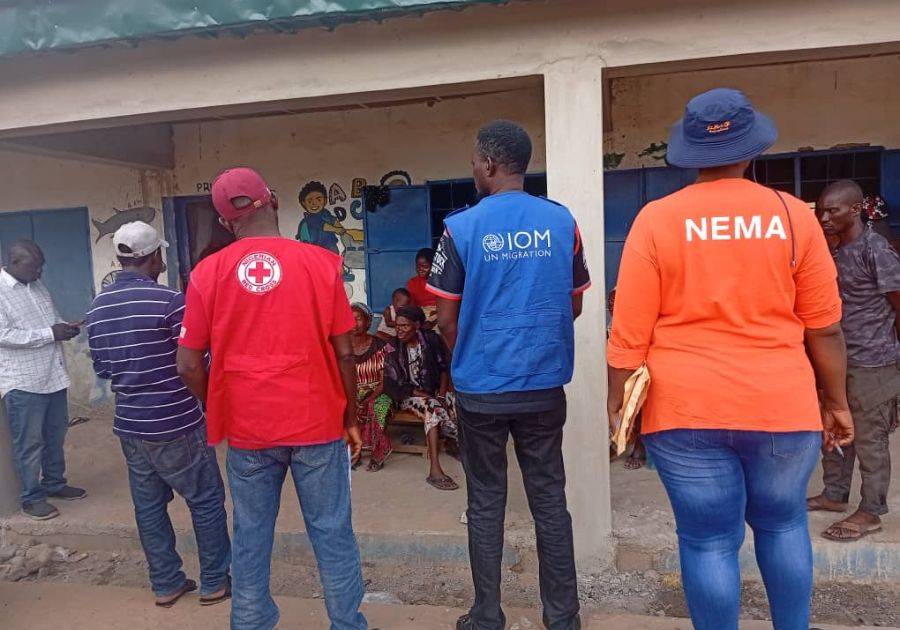
Now, Oteh works on the frontlines of humanitarian response in Nigeria, engaging with internally displaced persons (IDPs) in some of the country’s most fragile environments every day. As a DTM Field Enumerator, he gathers and analyses data on internally displaced persons (IDPs), migrants, and other vulnerable populations. Oteh works directly with the affected populations on a daily basis, requiring him to be culturally sensitive and considerate, but also detail-oriented and determined.
“Every day I travel to rural communities, connecting with displaced people and listening to people’s stories and the pain they carry,” he explains. “It has not been easy coping with the kinds of things we see.”
Facing insecurity in the field
Insecurity is one of the major challenges Oteh and his peers face, as they take risks every day to assess situations. “We have to do serious assessments before accessing some locations because even the IDPs themselves are not always safe,” explains Oteh. “But they need humanitarian assistance, so we take the time to reach them.”
One experience that has stayed with him occurred in Ugba. “A woman and her four children had gone four days without food, surviving only on water,” he recalls. “It was clear from their physical condition. There hadn’t been any intervention yet, and because our mandate doesn’t allow us to give direct assistance, I couldn’t help them directly. It pained me.”
Acting quickly, Oteh alerted the camp chairman and contacted the Benue State Emergency Management Agency to ensure support would arrive.
“Every day in the field we have a story to tell because of the experience we go through. But we still stand tall.”
Lifelong learning
Off the clock, Oteh finds strength and inspiration in continuous learning. He devotes much of his free time to humanitarian studies through platforms like Tayo and Kaya. For him, growth is personal as well as professional. “I’m always happy when I help or solve a problem for someone in need.”
Reflecting on the traits that keep him going, Oteh credits patience, tolerance, and resilience. These are the foundations of the work he does every day.
Read more stories from the field here.