


On 1st January 2027, a new United Nations Secretary-General (UNSG) will move into the 38th floor of the Secretariat building at UNHQ. This appointment could be one of the most consequential in the entirety of the organisation’s 80-year history.
At the end of May, the United Nations Association UK hosted a hustings event at Westminster Central Hall – the very building where the first-ever General Assembly was convened in 1946.
This building is permeated with significance. Built in the early 1900s in a dramatic baroque-style architecture, with a grand staircase and marble-wrapped entrance, it signifies grandiose empires and entrenched social, political and cultural systems. It has often stood in stark contrast to those who, throughout history, have entered its doors to pursue civic debate and discussion on pivotal issues. This includes the likes of the British suffragettes and Women’s Freedom League, as well as Mahatma Gandhi and Dr Martin Luther King Jr, all of whom dedicated their lives to overturning the status quo of their time.
There was no doubt that the setting served as a profound reminder of the United Nation’s legacy, but also how much is currently at stake. Four of the five UNSG candidates took to the stage to discuss their priorities and ultimately how they themselves can overturn the status quo of today to save the UN.
Despite their differing backgrounds spanning human rights, diplomacy, development and multilateral governance, the four candidates were united on the fundamental challenges the system faces. At the heart of this lies a crisis of trust.
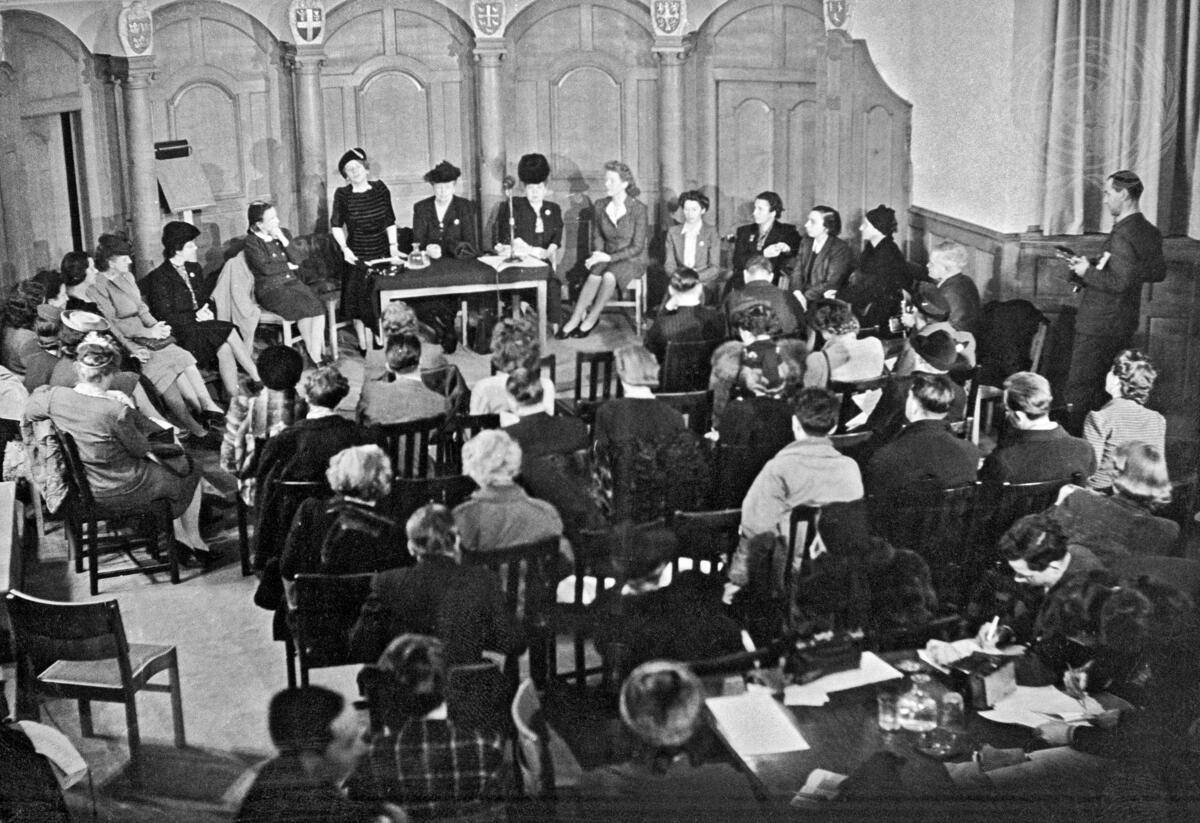
The first session of the United Nations General Assembly was hosted at Westminster Central Hall on 10th January 1946. UN Photo / Marcel Bolomey.
The UN is facing a crisis of trust
The UN derives its legitimacy from its ability to do what nations cannot do alone: bring adversaries together, facilitate solutions and provide a platform for effective collective action. When countries choose to bypass the organisation, for example, by utilising mediation capabilities of the African Union or EU among others, it provides a clear indication that confidence in its value is eroding. As Michelle Bachelet observed: “If people do not see the UN working, they will not believe in multilateralism.”
The consequences of this are visible. In many of the defining conflicts in recent years, the UN has struggled to play a central role in mediations. Sudan, Ukraine and Gaza are just some examples. As Rafael Grossi bluntly put it: “The organisation is nowhere to be found.” Whether that is a fair claim or not, perception matters. These are precisely the types of conflict the UN was designed to prevent and resolve.
The veto power of the five permanent members of the UN Security Council has undoubtedly contributed to this challenge. In both Gaza and Ukraine, the direct interests of permanent Security Council members have made meaningful UN action seemingly impossible. The consequence is an institution that is increasingly judged by its apparent inability to influence outcomes during the moments that really matter.
Compounding this is another crisis, a deepening financial crisis, that both reflects and accelerates the lack of trust: chronic liquidity shortages, mounting arrears and growing pressure on its core budgets. Yet these pressures are as much a symptom as a cause of the UN’s challenges. A UN that is deemed ineffective struggles to secure financial and political support, whereas a UN with restricted resources finds it difficult to demonstrate tangible value. The UN risks becoming trapped in a cycle of declining trust and declining capacity. In order to safeguard the long-term legitimacy and even the existence of the system, restoring that trust to break this cycle must be the central priority of the next Secretary-General.
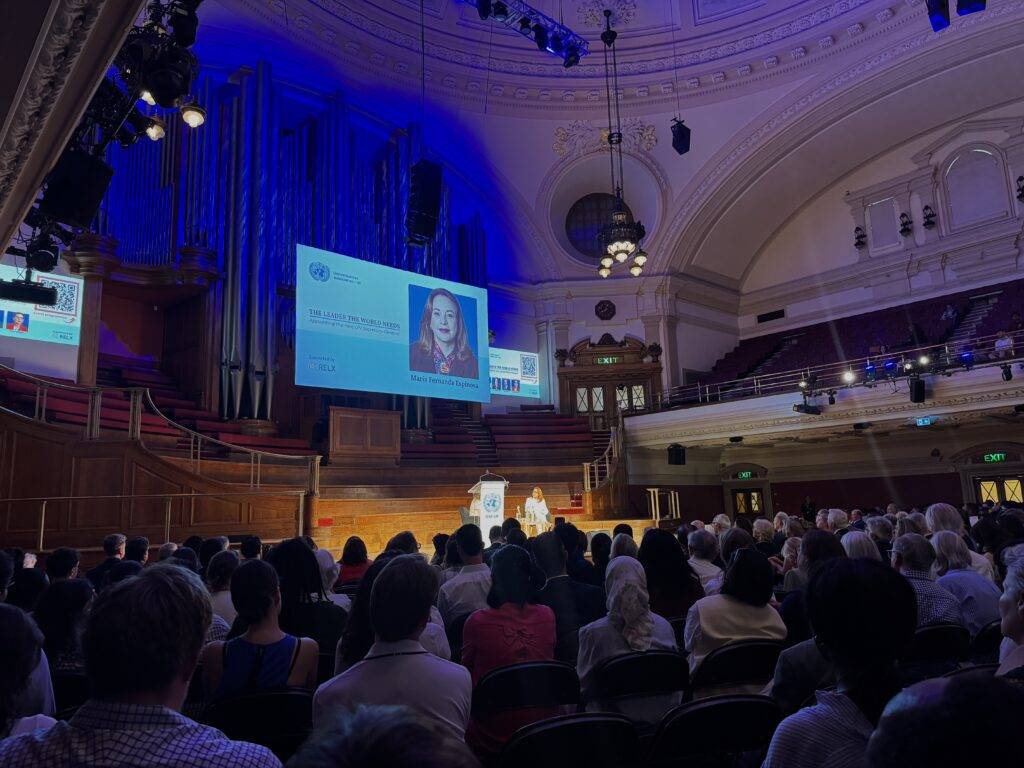
María Fernanda Espinosa, one of the four UN Secretary-General candidates, shared her take on changes the UN needs at the hustings event.
What the UN Secretary-General candidates agree on
What was striking at the hustings was not where the candidates disagreed, but rather where they agreed. Their solutions on how the UN can be saved varied. Some emphasised a more assertive diplomatic role for the Secretary-General, where others focused on strengthening prevention from the outset, or reducing bureaucracy and building a more agile institution. There was broad consensus that the UN must engage more effectively with a wider range of actors, including civil society, local NGOs and businesses.
All of them asserted in some way or another that to save the UN, it has to become more visible in presence and results. On the ground, in negotiations and generally on the world stage. Ultimately, the next Secretary-General will not be judged on reform initiatives, proposed strategies or partnerships. They will be judged on the UN’s delivery and ability to restore credibility among member states, particularly major powers.
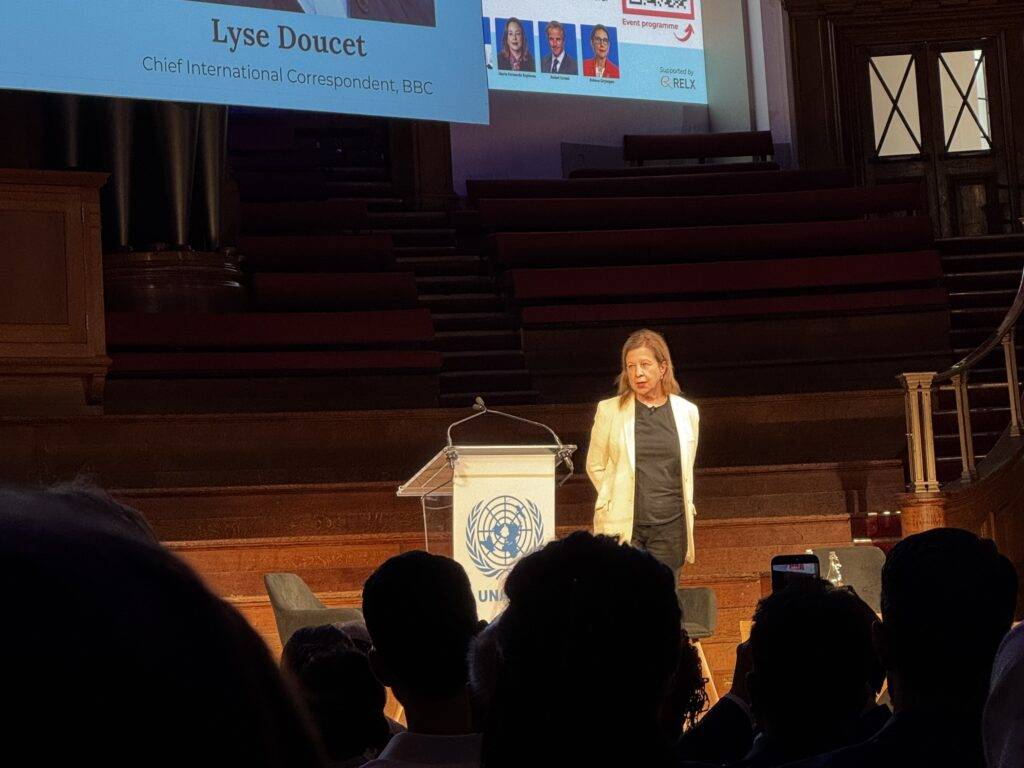
Lyse Doucet, Chief International Correspondent for the BBC, moderated discussions with each of the UN Secretary-General candidates.
Can the next UN Secretary-General restore trust?
While the world looks very different now to what it did in 1946, the principles upholding the UN Charter are just as relevant today. That is why this election really matters. Whoever assumes the post in January 2027 will inherit an organisation facing a profound crisis of confidence which is the biggest challenge a Secretary-General has faced in decades. It’s not a question of how each candidate will go about saving the UN – but whether any of them can prove multilateralism still works and can restore trust in the institution at a time when the world has never needed it more.
The challenges ahead are huge, but so is the opportunity. Every candidate at the hustings recognised the gravity of the situation and we left with some hope and optimism for the sustained future of the United Nations.