


Last week, CTG’s Sustainability Manager, Mia Zickerman-White, visited the United Nations Headquarters to attend a dialogue exploring the next decade of the Women, Peace and Security (WPS) Agenda. Hosted by Namibia, chair of the Women, Peace, Security and Humanitarian Action (WPS-HA) Compact, the event brought together a range of stakeholders – special envoys, ambassadors, advisors, philanthropists and local women’s organisations, among other experts – all equally determined to safeguard the Agenda’s action and future.
26 years ago, member states from across the United Nations came together to adopt United Nations Security Council Resolution (UNSCR) 1325 – the instrument that would set out the Women, Peace and Security Agenda.
This marked a moment of hope, putting the rights of women and the role of gender equality in preventing conflict and sustaining peace firmly on the international agenda.
For years, progress was steadily made. Today, however, we live in a very different world. The last few years have proved turbulent: increased militarisation and violent extremism have been coupled with a growing number of conflicts. This has occurred across a landscape of slashed humanitarian, development and peacebuilding funding and a backtracking on gender commitments across the entirety of the sector. Programmes centred on gender equality have been among the first and hardest hit, with funding for gender equality falling by nearly US$3 billion in a single year. It seems much of the world has forgotten precisely the purpose of the WPS Agenda, and as a result, it is at a critical juncture.
As many of the event’s speakers emphasised, the challenge is not a lack of commitment, but a crisis of implementation, political will and imagination. At a time of constrained resources, new and innovative approaches are required. So what could change look like?
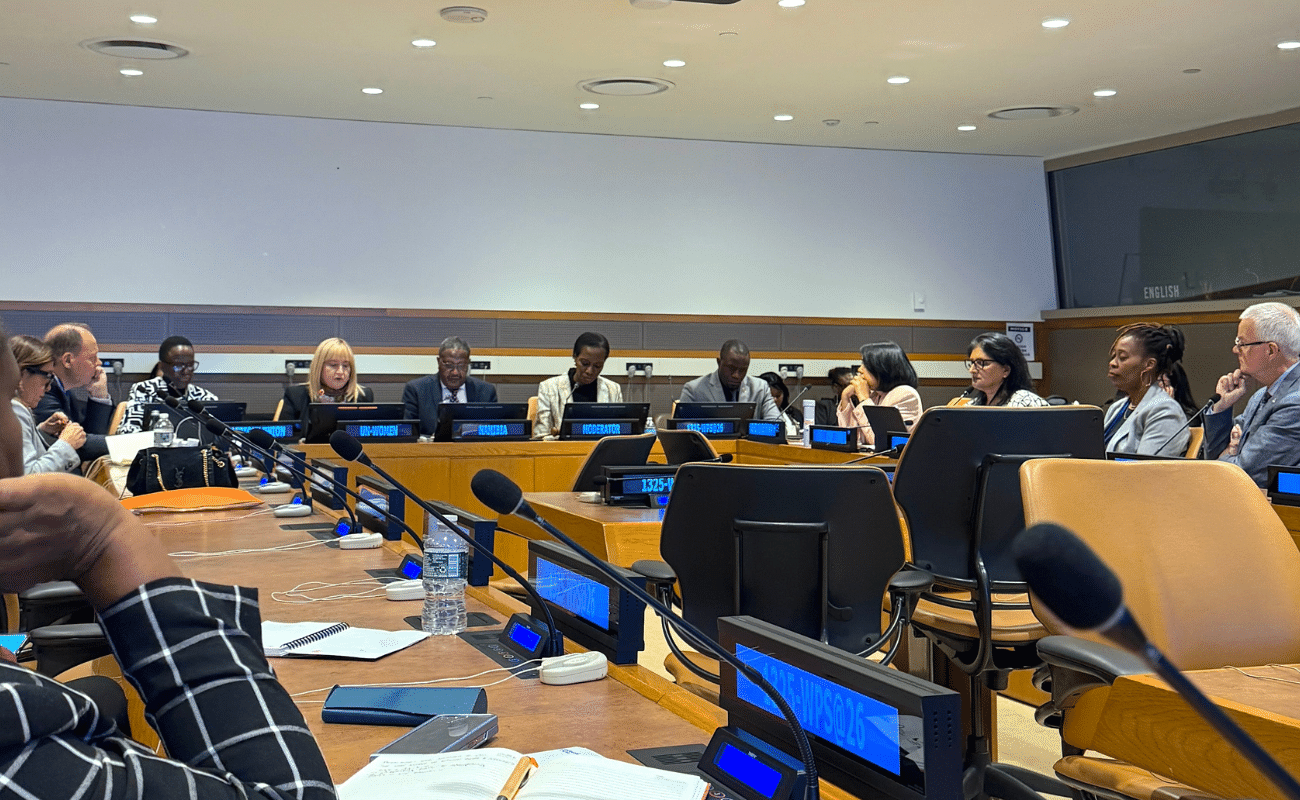
For 26 years, UNSCR 1325 has shaped global policy and high-level debates. In the next decade, the focus must shift to translating international frameworks into meaningful, everyday security for local communities.
The language and narrative
The dialogue made clear that WPS has become siloed and is widely seen as a specialised agenda focused solely on “women’s issues”, or something that should be confined to high-level military or defence ministries. Representatives from the Organisation for Security and Co-operation in Europe (OSCE), Canada and the European Union (EU) all challenged the divide between “hard” and “soft” security. Where hard security refers to military force and physical defence, soft security denotes quiet non-military protection mechanisms such as social norms or community standards. Dr Lara Scarpita of the OSCE pointed out that “soft security” has become a synonym for women’s issues, and as long as that split exists, women will not have a seat at the table where “hard” decisions are made.
The issue then is not only who sits at the table, but the language used around it. WPS terms are familiar to those at UN offices in New York or Geneva, but mean little in the places the Agenda is meant to serve. If WPS is to succeed in the current climate, it must be translated into terms people recognise in their day-to-day lives. UN Women’s Chief of Peace and Security, Päivi Kannisto, emphasised that the WPS Agenda must feel like peace and security to women in their communities, villages and homes. Only then does it mean something.
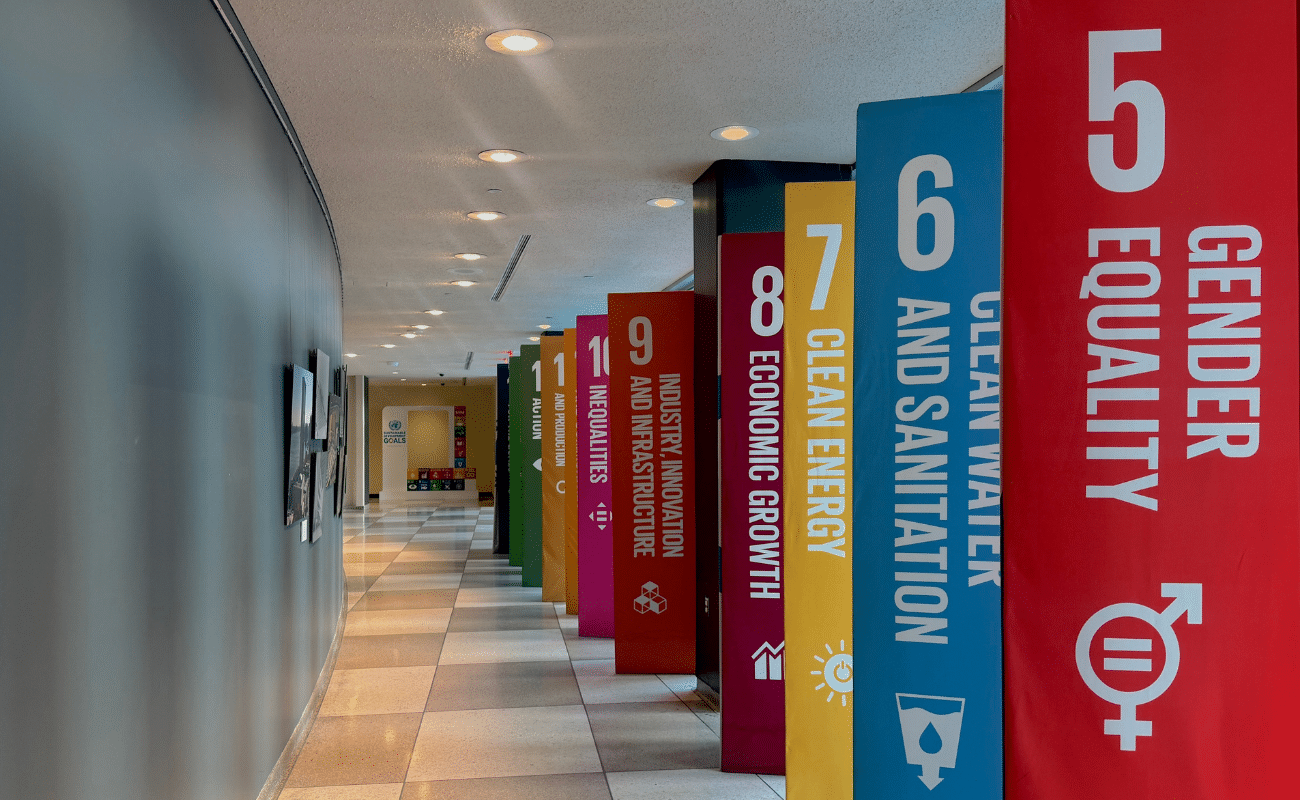
Elevated language and policies mean little if their impact is not felt on the ground.
Likewise, the African Union’s Special Envoy, Ambassador Liberata Mulamula, pointed out that the people we call rebels and generals are women’s husbands, sons and neighbours. Women live alongside those directly involved in conflict, yet they are consistently left out of ceasefires and processes that determine what their future looks like. That proximity is expertise, and it needs to be treated as such. Her comments drew me back to Cynthia Enloe’s question: “where are the women?” Nearly four decades after her seminal work was published, women’s expertise in peace and security is still not recognised for what it is.
WPS is not a specialised concern or a trade-off against security. It is a practical tool for preventing conflict and sustaining peace that benefits everyone. The Agenda can only succeed when that can be communicated effectively through language that people, including men, feel and understand.
Revisiting prevention
Much of the conversation around WPS today focuses on what happens once a conflict has already started: protecting women and girls, securing their place in negotiations and rebuilding communities after peace is achieved. All of this matters, but the original purpose of the Agenda was to prevent conflict entirely. Pravina Makan-Lakha, Associate Director at Open Society Foundations, reminded us that the creators of the Agenda called for reduced militarisation and the non-violent resolution of conflicts, not just better responses to it. This is not to say that prevention should replace participation, but participation in peace processes is not enough if conflicts are allowed to start in the first place.
So what does conflict prevention actually look like? Italy’s WPS Coordinator observed that it is extremely difficult for a country to meaningfully implement WPS when women are excluded from public life. In other words, WPS cannot succeed in isolation from broader gender equality.
This takes us back to basics. Prevention means doing everything we can to strengthen women’s participation – in the economy, in politics and in general civic spaces. Josephine Wellogo of the African Union spoke about how current commitments to women’s participation, such as quotas in politics, are persistently undermined by patriarchal norms and online abuse designed to shame women in leadership positions.
Removing barriers to women’s equal participation in public life does not happen overnight. It requires sustained investment in women’s leadership, particularly for young women, and in changing attitudes across entire societies. But the benefits reach far beyond the WPS Agenda. Where women participate fully in public life, institutions are more representative, societies are more resilient and the conditions for peace are stronger.
Leveraging private sector opportunities
This is where the private sector comes in. CTG has long been an advocate for the private sector’s role in advancing the WPS Agenda, so it was encouraging to hear this mentioned multiple times throughout the discussion. Italy asked a poignant question that is currently reverberating throughout the multilateral system: as budgets shrink, should new forms of funding – including from the private sector – be explored?
What stood out, however, was that the discussion extended beyond funding. The Open Society Foundation pointed out that in conflict-affected countries, businesses are deeply embedded in local markets. As a company operating in these markets, we see and understand the influence businesses can have within the communities where they operate. That influence is an opportunity for the Agenda, and the question is no longer just about what companies can fund, but what they contribute beyond that – how they operate, the standards they hold themselves to and whether their presence makes communities more stable.
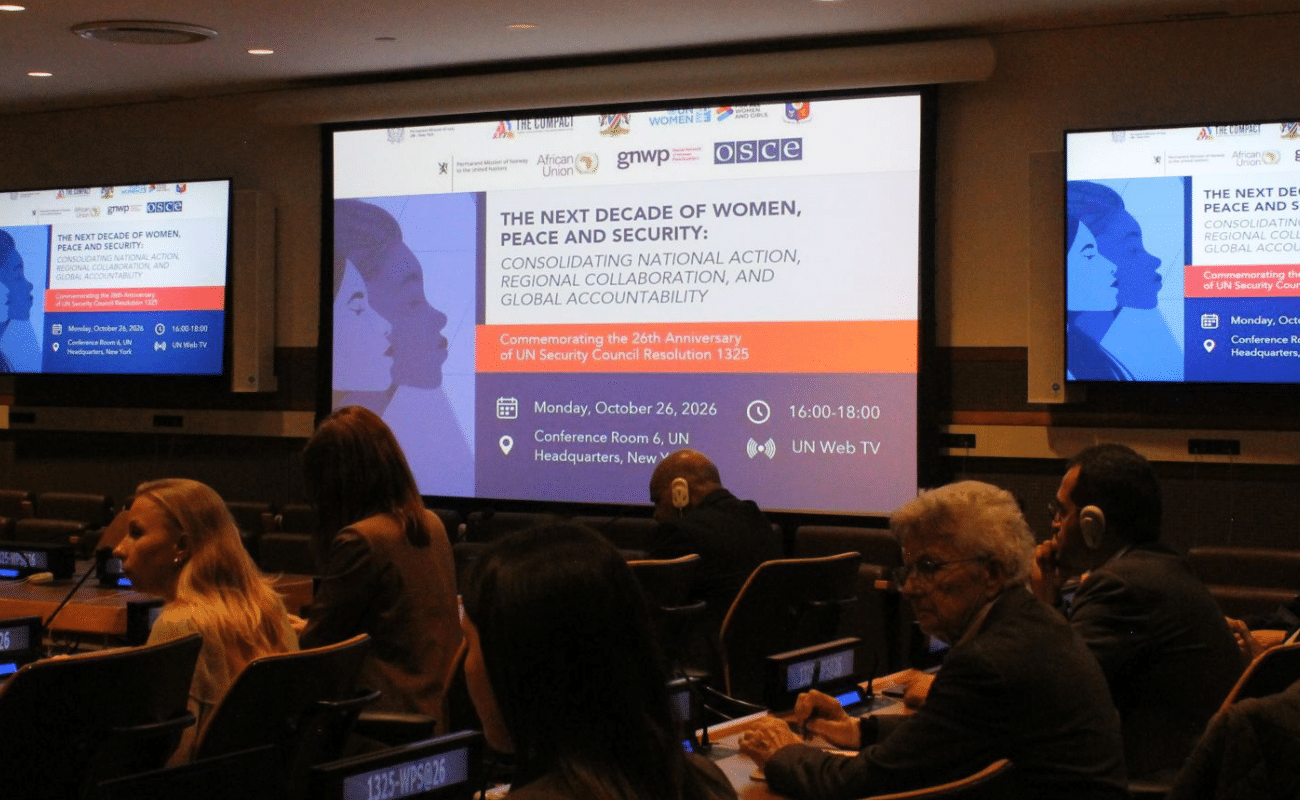
CTG has seen the exponential impact of direct investment in women in local economies through our own firsthand experience.
This is something CTG feels strongly about. Seeing the private sector solely as a provider of money excludes many businesses, particularly those operating in fragile and conflict-affected settings or resource-constrained sectors. Yet these are often the businesses closest to the people the Agenda aims to serve. This directly supports prevention. Improving women’s access to jobs, supporting women in leadership roles and providing safe, fair employment for everyone strengthens women’s economic security and builds the participation in public life that makes communities more resilient. This is a contribution that every business can make, no matter where it operates, what size it is or what revenue it has.
Looking at the decade ahead
The dialogue covered a vast amount of ground, and nobody in the room claimed to have all the answers. But there was clear consensus on the biggest challenges facing the Agenda as well as where the solutions might lie.
Over the last 26 years, UNSCR 1325 has featured in high-level debates, policy frameworks and national action plans. For the next decade, WPS needs to be embedded in everyday life.
As Namibia’s Ambassador raised in the closing, the future of the Agenda will be defined not by the challenges it faces, but by the actions we take together. CTG is a proud member of the WPS-HA Compact and looks forward to working even more closely with the Compact and fellow signatories through this critical period to make these renewed ambitions a reality.