


There is a lot of talk about AI coming for our jobs. Every industry is asking which roles will be automated, which skills will become obsolete and what work will still need a human being.
But how is that conversation playing out in the humanitarian sector? And when we talk about AI stealing humanitarian jobs, whose jobs are we actually talking about?
Is AI really here to replace humanitarians – or could it make the work easier?
AI is strong in the office, but weaker in the field
For someone working at an HQ, AI integration might mean using models that analyse Excel spreadsheets or prepare donor updates in seconds. For an enumerator in rural Afghanistan or a nutrition adviser in eastern DRC, the meaning is much more questionable.
The first question is whether AI is even an option. Many frontline aid workers still contend with weak internet connections, unreliable electricity, limited mobile coverage and paper-based systems.
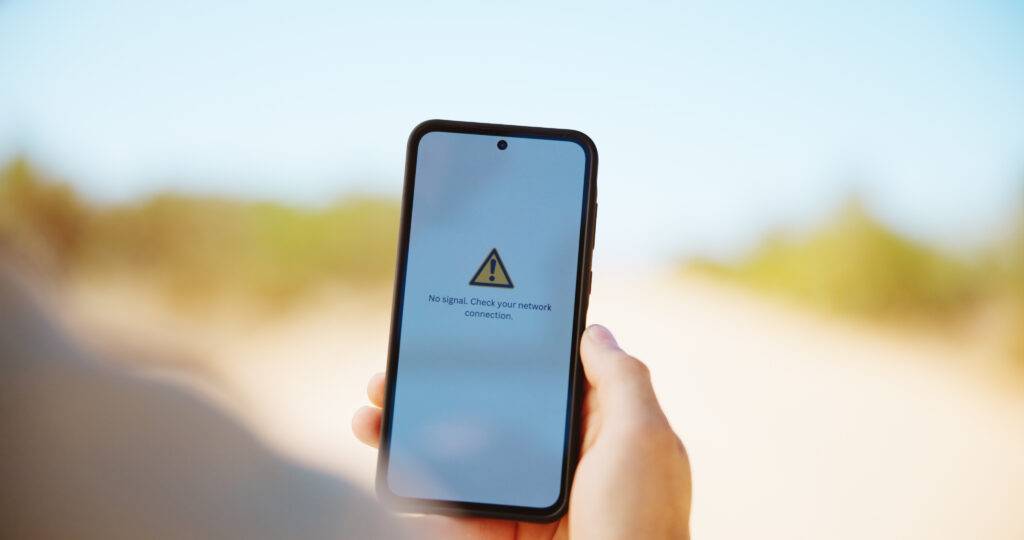
Most AI models require a reliable internet connection, which is not always available in challenging humanitarian contexts.
The second question is whether an impersonal algorithm would help or hinder frontline fieldwork.
AI cannot replace the human face of humanitarian work
Humanitarian work is and will remain both deeply personal and necessarily physical.
A protection officer sitting with a survivor of violence needs eye contact, empathy and trust. A security manager deciding whether a team can safely move into a high-risk area must rely on informal intelligence channels, often from relationships built over tea in local shops. A livelihoods specialist seeking to understand how conflict, drought and market disruption affect a community needs to spend time in a village to learn its economic history and buying habits.
In all these roles, and many more, fieldworkers must gather vital knowledge and insights in person – the kind of nuanced understandings that can only come from actually being there on the ground, that cannot be reduced to a dataset.
AI can support these jobs, but it cannot replace human judgement, nor can it replicate the human connections that find the most critical insights. I’m not worried about seeing robots in a refugee camp anytime soon.
AI can help humanitarians focus on the work that matters
When used appropriately, AI can be genuinely helpful for aid workers.
With AI, a MEAL manager can analyse survey data more quickly. An operations manager with English as their third language can now articulate themselves using AI, rather than spending hours struggling to perfect an email.
Beyond these functions, I believe the real opportunity of AI is in tackling the huge administrative burden of frontline work. Anyone who has worked in humanitarian operations knows how much time can evaporate into reporting, data entry, information management and paperwork. Ask most field staff whether they would like to spend less time on admin and I suspect the answer would be a resounding “yes!”. AI’s real power lies in lifting the administrative weight off humanitarians so they can focus on people, not paperwork.
How we use AI to lighten the administrative load
At CTG, we are already exploring how AI can support some of the operational processes that sit behind humanitarian delivery.
Having spent two decades recruiting, mobilising and supporting personnel across complex environments, we know where administrative bottlenecks exist and where technology can make a meaningful difference. AI-assisted CV screening, for example, can help recruiters review applications more efficiently, while AI-supported assessments can streamline parts of the candidate evaluation process.

AI can’t replace human judgement, but it can help streamline administrative bottlenecks by handling mundane tasks.
Human judgement remains critical, but the strategic use of AI can significantly reduce administrative strain. This allows experienced professionals to spend more time on the conversations, decisions and relationships that ultimately determine successful deployments.
Note the word ‘strategic’. The greatest gains come when AI is applied to processes that are already well understood – where experts can pinpoint exactly how AI can streamline workflows and tackle time-consuming tasks. Ultimately, AI should enhance how we work, leaving the core mission firmly in human hands.
AI can help humanitarians do more with less
For many aid workers, the immediate threat to their job is not AI, but lack of funding. Donor funding is being reduced despite the fact that humanitarian need outstrips supply every year, and continues to grow. Organisations are being asked to respond to an ever-increasing flow of crises with smaller workforces and fewer resources.
This is where the conversation around AI needs to change. If donor governments are asking humanitarian agencies to do more with less, shouldn’t AI be part of the answer? It could help struggling UN agencies and INGOs reduce administrative burden, streamline operations and free up scarce resources for frontline delivery.
However, the hurdle here remains investment: investment in the right technology could become another way to support a humanitarian system under enormous financial pressure, but it will take more than a free subscription to the latest leader in Gen-AI.
Unlocking value requires investment – in AI and people
The real challenge, and the real investment, lies in redesigning processes, training people, strengthening data quality and supporting organisations through this digital revolution. Without that foundation of training, policy and governance, AI risks becoming another underutilised tool. At best, it won’t live up to its potential. At worst, it will be a very real risk to organisations and beneficiaries.
If donors genuinely want agencies to do more with less, funding should not stop at the software licence. It should also support the operational changes that allow AI to deliver meaningful and sustainable efficiencies.
Without effective training, humanitarians will fail to harness AI’s potential benefits.
This intentional investment in training must extend to the people on the ground, lest it fund another digital divide. International organisations and large agencies may have access to sophisticated AI tools, but national staff and local organisations, who carry the greatest responsibility for delivering assistance, are often left with limited access to the training and infrastructure needed to use them.
There is also a message here for aid workers themselves. If you work in this sector, now is a good time to upskill in AI. You do not need to become a data scientist. But understanding how AI works, where it can add value, how to verify its outputs and when not to rely on it will become an increasingly important professional skill.
The humanitarian sector will always need technical experts, programme managers, engineers, security professionals, generalists and specialists across a spectrum of expertise. Increasingly, it will also need people who are comfortable working alongside digital tools, understanding their limitations and using them responsibly.
So back to my question: is AI coming for your humanitarian job?
The answer is yes and no. Some roles will change. Some tasks will disappear and some will evolve to require new skills. Most humanitarian jobs will continue to depend on the judgement, relationships and local knowledge that no machine can ever replicate.
More importantly, aid workers closest to communities should not be passive recipients of new technology. Their experience, judgement and understanding of context should help determine how these tools are used and where they add value.
Bill Gates recently described AI as potentially the “greatest equaliser ever invented, or the worst source of injustice.” Which side of that line we end up on will depend on whose work it is designed to support. If it becomes another reason to reduce the workforce, we have missed the point.
But, if AI-investment allows agencies to keep skilled people closer to communities, respond to more people with the resources available and give frontline staff more time to do the work that only they can do, then AI can be a lifeline.