


In humanitarian and development operations, timely recruitment is everything. A delay of even a few hours can make the difference between emergency medical staff reaching a clinic before supplies run out, or engineers reaching an earthquake-affected area and stabilising unsafe structure before they collapse. As CTG’s IT Director, Algene Suria, puts it: “Time isn’t just money, it is lives.”
From reactive to responsive humanitarian recruitment
Across conflict zones, frontline emergencies and remote field locations, AI is beginning to accelerate how talent is identified, verified and deployed. For humanitarian jobseekers, many of whom are themselves displaced or working from low-connectivity environments, AI-driven matching can reduce waiting times and improve access to opportunities.
AI is shifting recruitment from a reactive process to a more responsive one, and that shift is a big deal in humanitarian work,” Algene says.
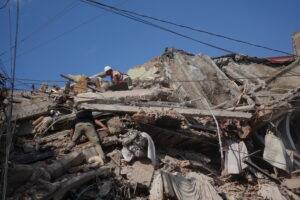
In humanitarian crises, rapid deployment can make a sizeable difference to the efficacy of response. AI’s speed can get shortlists in front of human expertise faster.
“In conflict zones, speeding up the recruitment process by even a few hours can mean medical staff or crisis responders arrive when they’re most needed. In places where every day counts, that’s not just about efficiency; it is about impact.For humanitarian job seekers, AI can mean faster responses and better job matching. With thoughtfully designed filtering criteria, AI can open doors faster for the right talent.”
Why human judgement still matters most
While AI shortlisting can rapidly scan thousands of CVs, the technology is not without risks. In contexts like Gaza, Sudan or Syria, where resilience, cultural sensitivity and local knowledge can be as important as technical expertise, no algorithm alone can evaluate the full picture.
“If we’re not careful, it can carry over the same biases we’ve spent decades trying to remove,” Algene says. “That’s why shortlisting criteria must be thoughtfully designed and regularly reviewed to ensure they reflect what truly matters for the role and don’t unintentionally exclude qualified candidates.”
Working with personal data from displaced people and national staff in fragile environments also raises heightened ethical obligations.
In my view, AI should support, not replace, human judgment”, he emphasises.
Imagine an engineer who rebuilt water points in hard-to-reach areas, or a livelihoods adviser who navigated complex community dynamics to keep a clinic open during insecurity. These kinds of lived experiences rarely reveal themselves neatly in keywords or machine-read CV summaries.
“Especially in humanitarian contexts, where understanding someone’s resilience or cultural sensitivity can’t be measured by an algorithm alone, the ideal balance is using AI for speed and scale, while keeping people at the centre of the final decision.”
How humanitarians are already using AI
The comprehensive study, conducted recently by the Humanitarian Leadership Academy and Data Friendly Space, found that 93 per cent of humanitarian workers are already using or have tried AI tools in their work, with 70 per centincorporating them into daily or weekly workflows.
However, only 8 per cent of their organisations report wide AI integration, highlighting a striking disconnect between individual innovation and institutional capacity. Fewer than half of those surveyed believe AI has improved operational efficiency, and only 38 per cent feel it has strengthened decision-making.
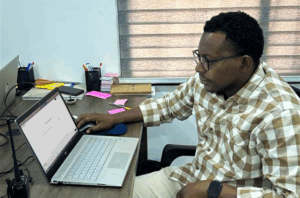
Many humanitarians are adopting AI to help with daily tasks like professional communication, report writing, data analysis and needs assessment.
Algene isn’t surprised: “AI has huge potential, but adoption is still uneven. Many organisations struggle with the basics: poor infrastructure, low digital maturity, internal resistance and lack of trust.”
Driving a balanced approach to AI
Our approach to AI aims to always strike the balance – AI can speed up work, but people, values and good judgment must always lead.
“While AI can absolutely help us move faster, the leap to better decision-making is more complicated. Especially in humanitarian hiring, where nuance and context matter deeply, AI should be just a part of the recruitment process but not the whole process.
Algene is concerned about governance issues and lack of regulation. He would like to see more explainable AI models, regular audits, and non-negotiable human oversight.
“When you’re handling personal data from displaced people or local staff in crisis areas/regions, the stakes are incredibly high. We need stronger guardrails because without them, we risk undermining the very values our work is built on.”
At the same time, he strongly believes fear should not stand in the way of progress.
“There are studies that flagged serious concerns about algorithmic bias, transparency, and data privacy. But I don’t think fear should stop progress, it should guide how we move forward,” he says.